Tuesday, December 2, 2014

Blue Is the Warmest (Hair) Color

Instead of dwelling on the explicit 10-minute sex scene in Blue Is the Warmest Color, which I've finally motivated myself to watch and which divided critics and the queer community (so much scissoring!), I want to focus on a smaller question:

Why has this movie's title been translated as Blue Is the Warmest Color? 

The French title, La vie d'Adèle, meaning "The Life of Adèle" after the lead character (played by Adèle Exarchopoulos), works so much better as a title for a 3-hour exploration of female sexuality. Ok, so there is the irony that blue is considered a 'cold' color. Yes, director Abdellatif Kechiche, whose previous film L'esquive is a subtle and brilliant exposé on France's multicultural youth, dresses his protagonist in blue and makes her girlfriend's hair blue for edginess and lesbian appeal. But everything that's meant for warmth in the film has the opposite effect.

First of all, Kechiche's choice of constant, extreme close-ups on Adèle's face made her seem bland and vacant rather than emotive. I think this choice was intentional, and it works at the beginning, when Adèle is still discovering herself and her sexuality, but it turns quickly annoying as all I could focus on was Adèle's inability to keep her lips closed. Her mouth had this lazy pout on it that I can't make sense of. Is she a daydreamer? Is she not self-aware? I was relieved by the final scene in the art gallery where we finally see her in medium long shots - still so uneasy about her surroundings but at last not the center of our attention.

 Look at that pout.

Secondly, Kechiche takes the path of least resistance to portray the romantic connection between Adèle and Emma (Léa Seydoux), but it's a shallow one striving for depth. Adèle's into books, while Emma's studying painting. Adèle is a helper, while Emma's a talker. They supposedly have sexual chemistry (more on that in a minute). This is supposed to be a life-altering shift in Adèle's life, but Emma seems to figure only sexually into this shift. There are no coming out scenes, only a meager (yet affecting nonetheless) instance of homophobia, and just one Pride Parade, but no real scenes of romantic support, admiration, or devotion. Aren't they supposed to love each other? I want more of those scenes. Kechiche gives Adèle's personal development a shot in that we watch her graduate, march in an education protest, and become a teacher. But really she's just a muse (Emma's muse and Kechiche's) and we all know that a muse's pedestal matters more than her heart or mind.


Ok, I will talk about that sex scene. There are the obvious criticisms, a few of which I'll name. It turns pornographic and male gaze-y in Kechiche's hands because he's a straight man trying to represent female sexuality.  There is a lot of focus on bums and panting. It involves positions that seem potentially unreasonable for a first sexual encounter (and some, like scissoring, that are stereotypical of lesbians and that may or may not be performed outside of porn, depending on whom you ask). It's not even that sexy but rather borderline animalistic.

Yet my biggest problem with the scene--and really, the whole film--is that it is supposed to represent the apex of female sexuality - pure pleasure, desire, fulfillment, even ecstasy - but we are not really there with Adèle and Emma even though we're watching them. We're not sympathizing or even experiencing vicarious/movie-watching pleasure. Rather, the tone I get is of Kechiche feeling jealous. Later in the film there is a group discussion about how female pleasure is deeper and more complex than male, and I get the sense that this is personal for Kechiche. He's making a movie to try to get at an understanding, but he's actually pushing himself, and therefore us, farther away from that understanding by defaulting to voyeurism. If we understood Adèle better (meaning Kechiche had actually made her a complex character instead of a shell of a young woman), we could have gotten there, together. But as we watch her walk away from the camera down a street in the final shot, her blue dress diminishing against the sunset, we don't know her at all, or what this sexual "awakening" has done. This is a shame, because I could have seen a lot of myself in her.


Monday, March 24, 2014

Connections, and Her

So I cried at Her, again. Those lonely characters seeking companionship in technology made me sad about how we connect with others, and the second viewing wasn’t any less intense.

Both times I saw the film in the same theater—the first time alone, the second time not. The first time I was two weeks into my job, and taking myself to the movies was thought to be a detox from the overstimulation of adopting the new skills needed for a job in social media: the ever-presence of screens, instant communication, and connections through technology. What I got out of watching Her for the first time was not a detox but an accentuation of those things, albeit without the fast-paced excitement of my job. Her is pretty melancholy and takes a subtly cautionary stance on the future of technology as a crutch and sometimes impediment to true human connection. I sat through the credits, tears streaming down my face, thankful for being alone in a dark theater where no one had to share my discomfort.

The second time I was three months into the job, more confident in my work (and less exhausted by it) and also more optimistic about the power of social media to bring us together. Yet the tears came for the same reason, and I felt overwhelmed by the tendencies we have to use media for what we think is connection but really may be preventing it. My discomfort this time extended to my movie-going companion, who was less moved by it but who did articulate that it made her uncomfortable. So did my tears, it was clear, as she eyed me sideways while the credits rolled. It took us a while to dissect what had happened to me in the theater, and we slowly inched from a place of distance at our differing reactions back to a place of understanding.  The whole post-viewing discussion, and even tone, was surprisingly Her-like, as it highlighted how we, as people, can go from connection to disconnection and back again in the smallest moments, like flecks of dust being brushed off a table only to fall back upon it again. With or without technology, connection is hard, but I am thankful that Her made me aware of how humans need it, try to get it, block themselves from it, and finally find it, even if only for a moment.

Sunday, March 9, 2014

The Complicated Feminism of "Frozen"


I watched Disney’s Frozen on a plane today – it was on one of those shared teleprompter-like screens that, nowadays, you’ll only find on domestic flights. This lack of individual screen permitted me to watch the gaggle of college girls sing along to the movie in front of me. They knew every word, which should have felt to me no different from the nights my own college roommates would put on the sing-along version of “Mamma Mia” and bop around the dorm room to find some cheer during finals week. But with Frozen, I kept in mind their enthusiasm for this movie as a backdrop to the fact that, while watching, I couldn’t make up my mind about whether or not this movie had a feminist stance. 


I’ll give you the rundown of the story, fittingly based on dour fairy-teller Hans Christian Andersen’s “The Snow Queen,” so that we can make sense of it together. Sisters Elsa and Anna are princesses, and when they are kids Elsa is cursed with a variation of the Midas touch – what she touches turns to ice. As a child Elsa has trouble controlling her power and accidentally strikes Anna with ice, injuring her. As a result, their parents decide it is best to keep Elsa’s power a secret, encasing her hands in gloves, shutting her away in the castle, and isolating her from her sister. Not surprisingly, this turns her into a closed-off, protective, literally frigid older sister.

As young adults on Elsa’s coronation day, Anna—the compulsive, spontaneous, evidently modern one—meets Prince Hans and gets engaged to him (on the same day, omg what?). Elsa finds out, and in her anger, accidentally freezes the ballroom and the rest of the town, which the townspeople interpret to mean that she’s dangerous. She runs away in exile to her own icy castle, where she sings a song about being free. Anna hunts after her with the help of loner mountain man Kristoff. A series of things happen as various parties try to lure Elsa back to the castle to end the eternal winter, during the last of which Elsa again strikes Anna with ice, freezing her heart. In keeping with fairy tale lore, only “an act of true love can thaw a frozen heart,” so Anna races to kiss Hans to break the spell, only to find that Hans is just using her to get to the throne. When he tries to kill Elsa, Anna jumps in front of the sword, though, which is the actual act of true love that revives her back to her full warmth. Yay, and they all live happily ever after.

So, what’s complicated about that? The thing is, many of the story elements could be subversively feminist, or not. So, let’s make a list:

Wait, I think this is feminist:
-       The Prince and Princess theme feels like a comment on exhausted tropes; for example, when Hans turns out to be a bad guy, we’re relieved and turn to root even more for the imperfect, clumsy, good-hearted Kristoff. We’re equally excited to see Anna, who’s not the helpless princess type, take matters into her own hands. She leads the effort to find Elsa, and Kristoff is an often self-interested, begrudged helper. Yay strong female characters!
-       Elsa’s self-imposed exile in her icy castle could be seen as a liberating break from patriarchal/feudal oppression
-       When Prince Hans reveals himself to be evil, the story is counteracting the countless romantic comedies and Disney movies that place a female character’s worth and self-worth entirely in the male lead’s heroism
-       There’s a song about both Anna and Kristoff being “fixer-uppers,” which proclaims that we all have flaws that can align in true love.  No more having to be perfect for a man!
-       “True love” turns out to be familial and not romantic, with romantic happiness a serendipitous side effect

Or is it?
-       Elsa can only feel free in isolation, because being at ease in society and/or having connections with people while also cherishing her gift is impossible, because that gift is damaging to the patriarchal status quo
-       For every time Anna saves Kristoff, there’s a time he saves her as well (or at least tries to). But this could also be advocating reciprocity, equal respect and contribution to a relationship, regardless of gender. Ahhh I don’t know! 
-       When Hans reveals himself to be evil, Anna is made to seem weak and a fool for falling so quickly, and can only redeem herself by kissing another dude. Oh no, bye strong female character!
-       Kristoff is the more obvious fixer-upper, according to his family’s song, but the part about Anna that needs fixing is that she compulsively decided to marry another man after one day. So she needs to change for a man anyway?
-       The fact that Hollywood still feels the need to write female protagonists into the world of princes and princesses frustrates me to no end! What is it about this ideal, this fascination with princesses?
-       There’s still a need to include Anna and Kristoff’s love at the end, as if we wouldn’t be satisfied with just the sisterly love story.

So I’m stuck; each point for feminism has a problematic (maybe postfeminist?) counterpoint. Maybe all this doesn’t matter and we should just be happy that Frozen passes the Bechdel test. But I’d like to think that a higher standard for our movies, especially our kids’ movies, is warranted. I also can’t help wondering if the girls in front of me loved the movie just for its music, or if they perhaps appreciated its complexity. Sound off in the comments if you think this film is progressive, transgressive, regressive, or if you don’t care!  

Monday, February 17, 2014

"Looking" just wants to exist

You may know that I'm a huge fan of Girls, so much so that I wrote 85 pages on it. So when HBO slotted Looking into the Sunday night spot after Girls, I enthusiastically started comparing the two: "Looking is the gay Girls!" "Replace New York with San Francisco and Lena Dunham with Jonathan Groff, and it's the same series!"

Patrick and Richie have a pretty awesome date. 

But despite similar premises (a group of friends trying to make it work in love, career, and play), Looking and Girls are actually quite different. If Girls wants to alienate, Looking just wants to exist. After five compelling episodes, Looking has constructed a narrative for its protagonists (Dom, Patrick and Augustin) that feels decidedly OK--not alienating, problematic, or harsh in the way that Girls treats its characters with (empathetic) disdain. The boys have jobs that are just fine, relationships that are maybe a little lackluster, and designs for their futures that they may or may not execute--and therein lies the dramatic tension. Queer as Folk, the most similar series about a group of gay men, featured a hostile, homophobic outside world that the characters were constantly struggling against. That series went off the air ten years ago--and now, in Looking, the fact that there's not much homophobia or discrimination in the characters' world signals just how much has changed. Now, Patrick, Dom, and Augustin are just free to exist and figure themselves out. This banalizing force is refreshing because it means not only that queer lives are no longer problematic on screen, but also that the true character work to be done in the narrative will be internally, and not societally, motivated. For example, last's night's message-in-a-bottle episode spent a day with Patrick and his new boyfriend Richie on their first real date. The tone is meandering and explorative as the connection builds and subtle character differences arise. Tough topics are broached, like dating someone who's positive or coming out to family, but the real tension is in how, and to what ends, Patrick and Richie reveal themselves to one another. In Girls, those revelations usually lead to emotional explosions, but in Looking, they just happen.

I think this ease of story feels so different now because we are still in the age of the televisual male antihero: Walter White, Hank Moody, Don Draper, and newcomer Rust Cohle from True Detective, to name a few. These characters rage against their lot, both stunted and propelled by their deep character flaws and philosophical positions. It's the me-against-everything-else-including-myself pattern, but in Looking, perhaps it's more the me-with-everything-else story. And frankly, I'd much rather watch Patrick try to understand why his longest relationship is five months than see Walter White stagger into the monstrosities of his own making; the former just feels more authentic, somehow. Maybe it's because we all just want to exist?

Wednesday, January 8, 2014

Fangirling with Sherlock


Warning: Spoilers ahead about the new season of Sherlock! If you're being diligent and waiting to watch it on PBS, stop reading now. 

If you've been around me the past few months, you know that Sherlock's return has occupied a lot of my obsessive brain. Yes, I am a complete fangirl about Mr. Holmes-Cumberbatch, so I watched the first two seasons multiple times to prepare for season 3 (and my friend Vanessa and I are probably also responsible for the full view count of this rapturous video, made by a very talented fan).

Watching Sherlock feels to me like I'm 12 again and have just been to a Backstreet Boys concert - I'm energized and frenzied, yearning after the unattainable and god-like, but also melancholy that it's not possible to recreate the enthrallment of seeing it for the first time. Go ahead and roll your eyes, because I'm not ashamed of my past and present obsessions.

From the way that Sherlock buzzes about in the media, it seems as though many other fangirls and boys share my feelings. Not knowing how Sherlock fakes his death kept the interwebs a-puzzle for two whole years leading up to this past New Year's Day episode. When creators Mark Gatiss and Steven Moffat gave us not one but three plausible scenarios, the third of which is revealed most likely to be the truth, it's clear that they are indulging the fans in a way that toys with and comments on two overlapping things: the immediacy of social media and the dedication of hyperfans.


This episode, "The Empty Hearse," generated 8,000 tweets at its peak, according to SecondSync. If you weren't watching it live, good luck if you were seeing it trend on Twitter; spoilers by the minute popped up like teenage acne. For example, in the graph above, the blip at 21:30 was most likely due to the Moriarty/Sherlock almost-kiss in scenario #2. This scenario, because of its complete ridiculousness, and because the hashtag trend #sherlocklives makes an appearance right afterwards, is a cheeky nod towards die-hard fans of the fiction; in other words, it's meta-fiction at its most social-media-driven.

The second episode was a little less "social" by about 100,000 tweets, but the story itself nevertheless seemed to have its fans at its core. What we got in "The Sign of Three" was romantic in tone, whimsical in plot, and emotional in character study. With the characteristic crime framework taking a backseat to Watson's wedding, Gatiss and Moffat were pushing the scope of Sherlock in terms of genre by centering the episode on Sherlock's inner complexities and his relationship to Watson. This is what fans (and memes) love about Sherlock and Watson, which the writers have recognized and hence capitalized on, all the while pushing us to reconsider what we expect from the series in terms of story.

So how much of series 3 feels forced into existence by hyperfans? Some, I'd say, but luckily the people behind Sherlock are clever enough to run with the new landscape that is TV-watching these days. I'll call them the 4 S's: second screen, streaming, social. To keep viewers engaged, television has to offer simultaneous engagement on laptops and phones, be versatile enough for people to watch when they want, and appeal to social media by promoting trend-able stories. In a sense, then, it has to be both immediate and prolonged. Sort of an oxymoron, no? Lots of shows achieve the flash-in-the-pan trend status but can't keep the momentum going (The Blacklist on NBC, anyone?). And of course there's little direct correlation between the quality of a show and its corresponding twitter activity (sometimes it's an inverse correlation!).

But in the end, I think the key to success for social TV is as simple as this: keep telling a good story and you'll have your audience. Mad Men, Game of Thrones, The Walking Dead, and Homeland are just a few others that have theirs. 

Now, if you don't mind me, I'll go watch more #BenedictCumberbatch videos in preparation for the finale this Sunday. 

Tuesday, November 26, 2013

Leaving Denmark (on Medium)


I just wrote an essay about my decision to leave Denmark and return to Boston on Medium. Here's the link and blurb:

Leaving Denmark

I left a country with an exceptional health care system to return home to the US, a country with a maddening one. Why? An operation, of all things. 


Sunday, November 17, 2013

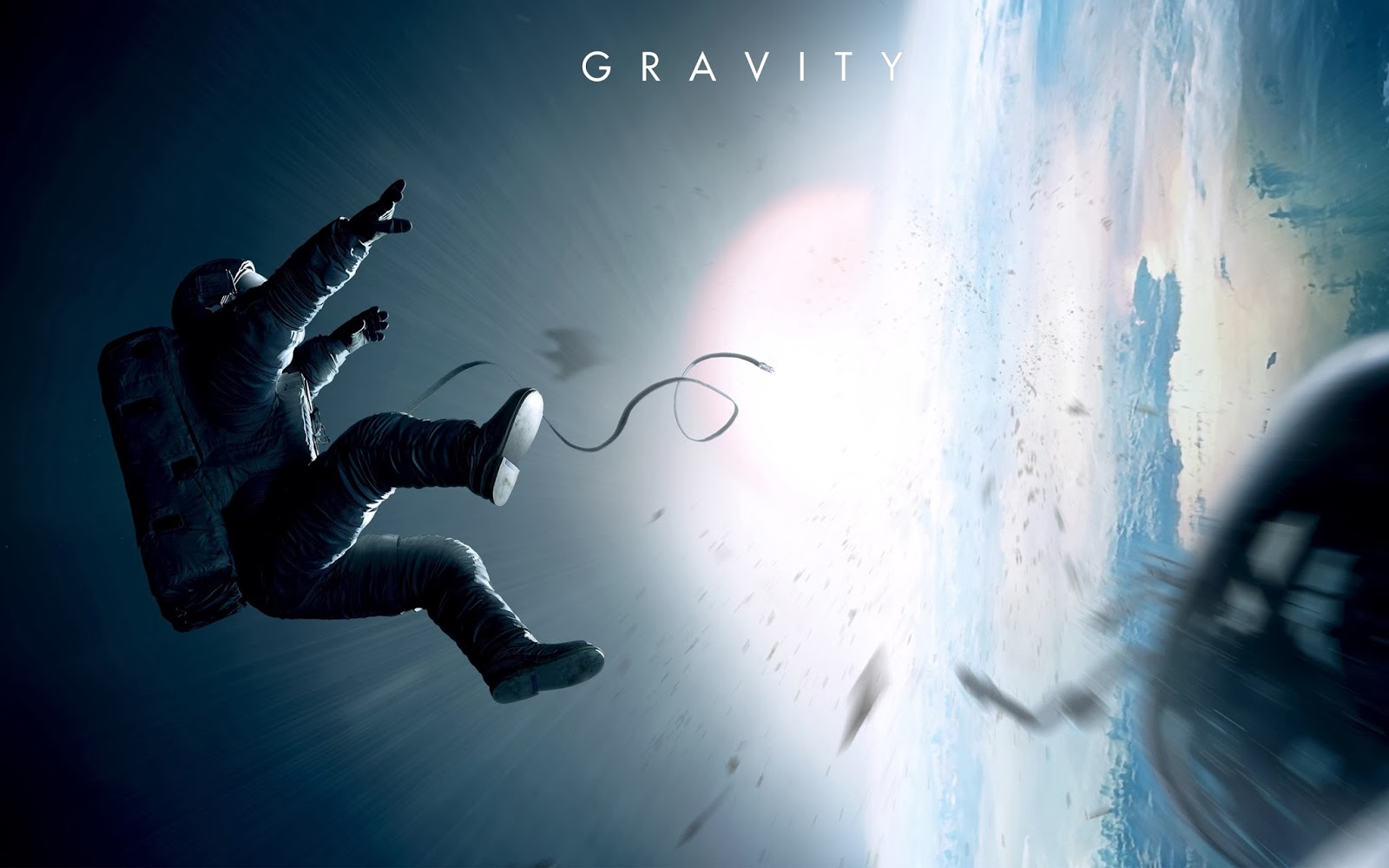
Linear Storytelling in Gravity


As the credits rolled at the end of Alfonso Cuarón's Gravity, my mom and I turned to each other, wide-eyed, and simultaneously said, WHOA.

The film is a complete thrill, as I'm sure you've heard. I could go on about the dazzling extraterrestrial special effects, 60 percent of which were shot in a 10x10 foot "light box." I could happily praise Sandra Bullock's performance ad infinitum.  I could also highlight the amazing feat of Cuarón's signature long takes - this time in space.

But instead I want to draw attention to the fact that Gravity is about the most linear story you can find, and it works. When the debris first comes flying towards Ryan and Matt within the first ten minutes of the film, I thought: how are they going to keep up this level of intensity and suspense for an hour and a half? Guess what - they did it, with strategically placed moments for us to catch our breath. But this is a film where nothing is wasted in the narrative (note: spoilers ahead).

First of all, what we learn about Matt and Ryan is only what's necessarily to drive the plot. Ryan is used to a laboratory and not zero-gravity; this could be seen as the 'call to adventure' in Joseph Campbell's theory of the hero's journey plot structure which ups the ante when her survival in space is on the line. Matt is a confident chatterbox, which perhaps reassures us when that crucial moment comes and they break contact - maybe he'll be alright with his words and the radio. Finally, the only other major character detail we learn about Ryan is that she lost her daughter, thus giving her a frame through which to understand her own death and her place in outer space (which, I would argue, then helps egg on her own striving for survival, and those moments of summoning strength are both character- and plot-based; again, no time is wasted in this film).

So, armed with purely the knowledge we need to have about these characters, we concentrate solely on watching them try to get home (live out the quest, in Campbell terms). Each obstacle that presents itself is a bigger 'uh oh' than before, but as the stakes rise and Ryan overcomes each danger, the suspense rises as well and each near-death (say, in the fire or when dream-Matt opens the pod door) feels less and less like a cheat. With the stakes so high, we hope Ryan makes it but even if she doesn't, either way we want to know how.

This spell-binding suspense is what sets Gravity apart from other linear stories, because while we crave a happy, victorious ending in keeping with the hero's journey, it seems so implausible that just watching a valiant struggle to whatever end there may be is enough. This is also why the actual ending is so satisfying, because there's struggle (against her own body) even in the last frames.


For those of you who have seen the film, what do you think of the ending and why?

P.S. After I wrote this I stumbled upon film scholar Kristin Thompson's fantastic and interesting analysis of the plot - hers both aligns with and departs from mine!