Tuesday, November 26, 2013

Leaving Denmark (on Medium)


I just wrote an essay about my decision to leave Denmark and return to Boston on Medium. Here's the link and blurb:

Leaving Denmark

I left a country with an exceptional health care system to return home to the US, a country with a maddening one. Why? An operation, of all things. 


Sunday, November 17, 2013

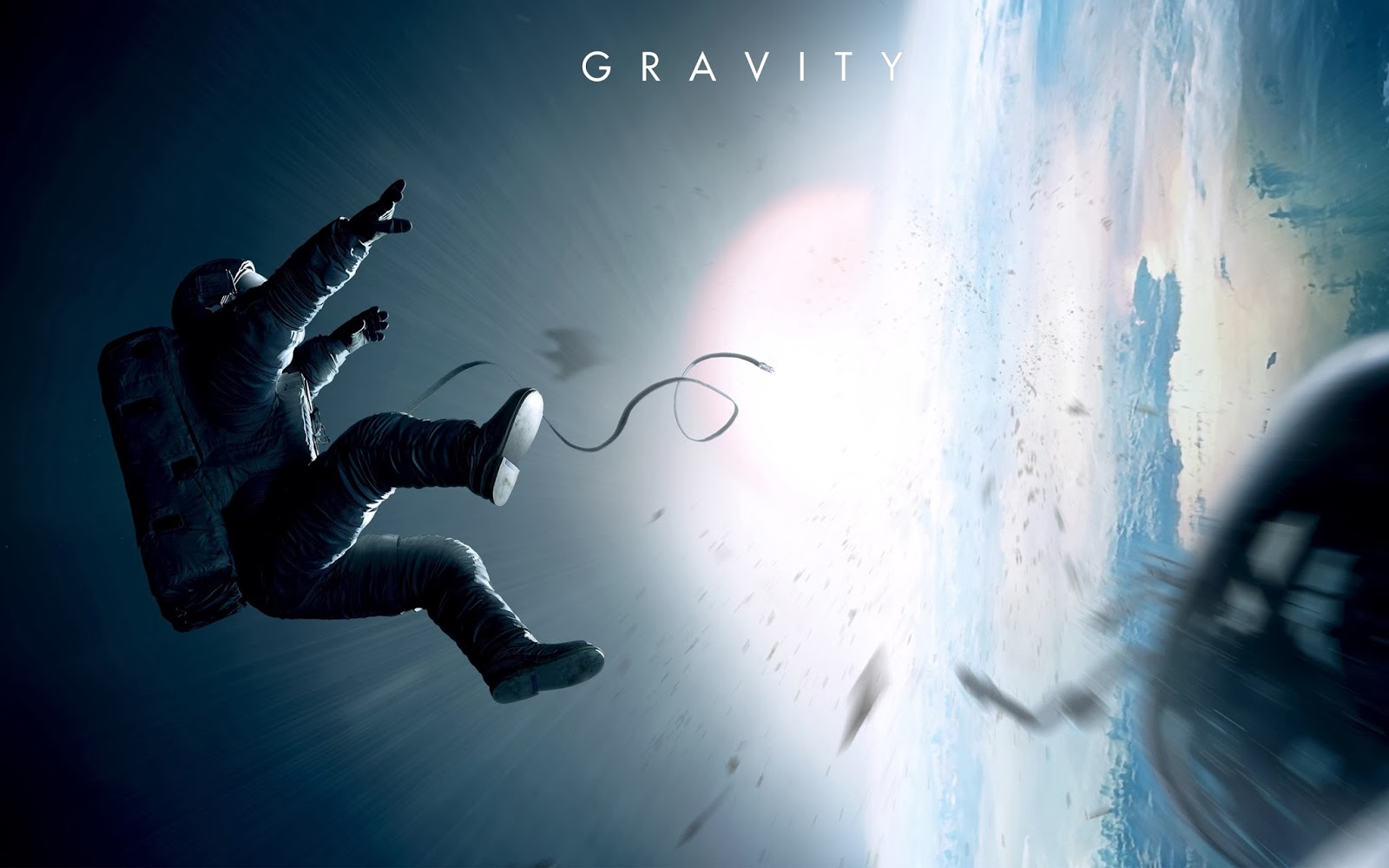
Linear Storytelling in Gravity


As the credits rolled at the end of Alfonso Cuarón's Gravity, my mom and I turned to each other, wide-eyed, and simultaneously said, WHOA.

The film is a complete thrill, as I'm sure you've heard. I could go on about the dazzling extraterrestrial special effects, 60 percent of which were shot in a 10x10 foot "light box." I could happily praise Sandra Bullock's performance ad infinitum.  I could also highlight the amazing feat of Cuarón's signature long takes - this time in space.

But instead I want to draw attention to the fact that Gravity is about the most linear story you can find, and it works. When the debris first comes flying towards Ryan and Matt within the first ten minutes of the film, I thought: how are they going to keep up this level of intensity and suspense for an hour and a half? Guess what - they did it, with strategically placed moments for us to catch our breath. But this is a film where nothing is wasted in the narrative (note: spoilers ahead).

First of all, what we learn about Matt and Ryan is only what's necessarily to drive the plot. Ryan is used to a laboratory and not zero-gravity; this could be seen as the 'call to adventure' in Joseph Campbell's theory of the hero's journey plot structure which ups the ante when her survival in space is on the line. Matt is a confident chatterbox, which perhaps reassures us when that crucial moment comes and they break contact - maybe he'll be alright with his words and the radio. Finally, the only other major character detail we learn about Ryan is that she lost her daughter, thus giving her a frame through which to understand her own death and her place in outer space (which, I would argue, then helps egg on her own striving for survival, and those moments of summoning strength are both character- and plot-based; again, no time is wasted in this film).

So, armed with purely the knowledge we need to have about these characters, we concentrate solely on watching them try to get home (live out the quest, in Campbell terms). Each obstacle that presents itself is a bigger 'uh oh' than before, but as the stakes rise and Ryan overcomes each danger, the suspense rises as well and each near-death (say, in the fire or when dream-Matt opens the pod door) feels less and less like a cheat. With the stakes so high, we hope Ryan makes it but even if she doesn't, either way we want to know how.

This spell-binding suspense is what sets Gravity apart from other linear stories, because while we crave a happy, victorious ending in keeping with the hero's journey, it seems so implausible that just watching a valiant struggle to whatever end there may be is enough. This is also why the actual ending is so satisfying, because there's struggle (against her own body) even in the last frames.


For those of you who have seen the film, what do you think of the ending and why?

P.S. After I wrote this I stumbled upon film scholar Kristin Thompson's fantastic and interesting analysis of the plot - hers both aligns with and departs from mine!

Tuesday, October 29, 2013

Inner Beauty in a Postfeminist Television Landscape?

Whether or not you're a fan of the show, you probably have something to say about TLC's What Not To Wear. "Oh, the makeover show?" you ask. Yes, it's the one where they transform women from 'drab' to 'fab' by throwing out their clothes and helping/forcing them to shop for a new wardrobe.

The same thing probably goes for Orange Is The New Black, Netflix's outstanding new drama. "Oh, the one about the women's prison," you say. Well, I have a lot to say about both--especially because despite a divide in genre and form (reality vs. fiction, episodic vs. serial), much of the content overlaps when it comes to women's inner beauty.

What Not To Wear aired its series finale a few weeks ago, and I'll admit, I binge-watched the entire last season leading up to this finale. I guess I found it hard to resist the temptation to watch what hosts Stacy and Clinton call 'fashion disasters' clean up their look.

But I found myself getting more and more uncomfortable with the premise of WNTW as I went along. The setup--where Stacy and Clinton surprise their contestants with intentionally embarrassing hidden camera footage of them in 'bad' outfits--seemed designed to sabotage and humiliate as much as possible so that the episodes can set up for the narrative of transformation we've come to expect from reality TV. Then, they dump the contestants' entire wardrobe in a trash can, but not before ridiculing it, sometimes before a 360-degree mirror.

(Ok, I admit, some of the outfits are pretty weird...Megumi, right, thinks this is a normal outfit and not a costume)

Finally, Stacy and Clinton take the contestant out shopping and POOF! Two days later she's a changed woman. Or is she? It depends on which context we're using to define changed.

During the finale, Clinton says, "it's really not about the clothes." And to some extent, the show does concentrate on bringing out the confidence, strength, and beauty that these women already have but aren't displaying on the outside, perhaps because some personal demons are hidden under or exacerbated by the bad clothes. My problem is that their vision of beauty is so incredibly narrow. I can't count the number of times the hosts have dressed their 'fashion victims' in the same iteration of jeans, blouse and blazer or flower print dress. Yes, they teach the women to dress for their body type, but does everyone have to dress in some combination of Stacy's trademark "color, pattern, texture and shine"?

More irritating still is the proclamation of transformation and success that the clothes will bring (and they often do). It seems that by adhering to a certain standard of femininity and fashion, these 'remade' women will better navigate their careers and personal lives. Whether this change happens because of a legitimately rediscovered confidence or rather just an easier time conforming to class indicators through clothing (and hair and makeup), who knows, but I'm inclined to say the latter. Maybe I'm just bitter because I hate the pressure of looking 'just right' or having a 'personal style' - why can't my personal style be comfy sweaters and no makeup? I mean, it can be, but maybe not if I want to get ahead in the urban, media-saturated landscape where I live my life.

Rosalind Gill, feminist critic, points out how the fascination with women's bodies in our current postfeminist media culture makes the body into our singular identifier:
"In today's media, possession of a 'sexy body' is presented as women's key (if not sole) source of identity. The body is presented simultaneously as women's source of power and as always unruly, requiring constant monitoring, surveillance, discipline and remodeling (and consumer spending) in order to conform to ever-narrower judgments of female attractiveness." (1)  
Agreed! So, where does television go from here?


The remedy could be something like Orange Is The New Black (yes, I also binge-watched), which takes the same narrative of transformation/facing demons and puts it in a humanistic and complicated light. I'm not saying OITNB doesn't have its own problems of representation (especially queer, class, and racial ones), but it's a start, because the show exists in a woman's space, mostly devoid of the male gaze (with the exception, of course, of 'Pornstache'). The women come in all sizes and colors in their mono-color jumpsuits, so we get to know them through their personalities and actions, not what they're wearing. If there ever were a show about real female inner beauty, this one's it in my opinion. Talk about Sophia - what a gorgeous character, whereas Pennsatucky is portrayed as an ugly person from the inside-->out.

So, what I'm saying is this: I think this narrative of transformation happens in both shows, but in directly opposite manners. The 'way out' to a better place in WNTW is through exterior fashion, but in OITNB on other hand, it's through self-investigation while the inmates endure their sentences, biding their time on good behavior. Depending on how you look at it, both are uplifting stories, but OITNB is just more realistic, in my opinion, because accepting yourself from the inside is much more complex, difficult and ultimately rewarding than just slapping on some new clothes to feel beautiful.


---
1. Quoted in Rosalind Gill, "Postfeminist media culture : Elements of a sensibility," European Journal of Cultural Studies 2007 10: 147.

Saturday, September 28, 2013

Danish Television has me hooked!

You might know that I love me some Danish drama. I recently wrote an article on why Danish television is fantastic over at Scandinavian Standard, a new site dedicated for 'scandis and scandi-philes' run by my good friend Rebecca.

Read it here! http://www.scandinaviastandard.com/get-hooked-on-danish-television/

Thursday, September 26, 2013

I will have used to live here

I'm departing today from the 'film' side and emphasizing the 'feelings' side, because I'm soon departing from Copenhagen, going back to live in Boston.

Last year, when I moved into shared housing, I wrote an application for acceptance. I titled the Powerpoint presentation "The Road Ahead," in which I detailed how the travel bug had brought me from Boston to Paris to Bretagne to Denmark and finally, I hoped, to Egmont Kollegium. In the application, through my enthusiasm for Danish canals and Carlsberg, I hinted at a sense of hope that Denmark would be my home, indefinitely. A year ago, my future did look that way.

the road ahead, one year ago. 

But I think, even then, something was nagging at me that I didn't want to acknowledge. Now, four days away from my transcontinental move, I'm finally able to embrace what two years of learning Danish, studying film, making great friends, and writing a thesis have pointed to.

I am American.

When I lived in France, I tried my hardest to rid my French of any trace of an American accent, lest strangers, upon meeting me, inquire, "Bush ou Obama? MacDonalds ou freedom fries?" I hated being associated with those stereotypes and instead tried to carve out my own sense of identity, away from cultural impositions. But the truth of the matter was, I came to France in the first place because of all the romantic cultural lore about France that I had soaked up as a teenager, so I was also guilty of generalizing. And at a certain point the lore no longer stuck, so I moved, but I didn't yet consider myself any more American than before.

I came back to Boston briefly, then went on to Copenhagen. I didn't give Boston a chance that year because I was dead set on coming back to Europe, thinking that maybe in Scandinavia I'd feel a true sense of home-away-from-home.  And I have, for these two years, mostly because I was studying something I love and made incredibly deep, lasting friendships (with Danes but mostly with other foreigners who have showed me that where you come from is just part of the equation, but a part nonetheless).

But this sense of home is fleeting, falling away, and when I projected myself into the future, I couldn't see myself marrying, having kids, or growing old here. I've dated only casually here; perhaps my wavering commitment to this country is why. I learned Danish with the prospect of finding a job after graduation and staying, but I found myself not trying very hard to look for those jobs, thinking that it was starting to get exhausting to have to get by all the time in a language and culture that makes me feel always slightly uncomfortable.

Because I am American. And finally, I know that this isn't a bad thing. It's what I make of it. Jason Farago articulates it well on the eve of his thirtieth birthday: "America isn’t like other countries; you can’t escape it, you don’t ever get to start again. Wherever you go America will find you." So why not mold it to your own standards instead of making sweeping judgments of it. It's like I've been ignoring my cultural identity not in name but in spirit--people here in Denmark have told me that I'm the least American American they know. I no longer treat that as a compliment, but rather something to puzzle over.

I've been reading a lot about sustainability (partly because climate change terrifies me, and partly because I want to get involved in the fight against it). And I've come to associate it with this conclusion: Kate in Denmark is not sustainable. If I were to stay, I would be burning up all my resources in trying to create the circumstances needed to be happy, whereas a more (emotionally) sustainable life in Boston does not impede the potential path to that happiness that may result in wasting fewer resources. Which in turn will hopefully help me focus on the stuff that matters: family, love, meaningful work. For example, if I am to invest in writing, trying to write convincingly in Danish is a frustrating impediment.

So I'm excited. To be able to watch Homeland on TV, not streamed on my laptop. To hug my parents and my puppy and not have to think about leaving them again. To exclaim over the variety of yogurt products in the grocery store. To engage with film and media in my own language and culture.

Of course readjusting to being an American in America will have some difficult moments, especially when I know I'll miss my friends immensely. I also know I'll try (to my chagrin) to transplant my European habits--biking, drinking in parks, and taking up less space--onto my life in Boston. But for once, I look forward to this challenge. Instead of bolting and running, I'm going to put my long-standing restlessness to work by living an intentional life, not a transitory one.

Because I am American, and so for Copenhagen, I can presently say, with both sorrow and joy: I will have used to live here.

Wednesday, August 14, 2013

After Before Midnight

Coming out of the theater on Monday, my friends Claire and Vanessa asked me what I thought about Before Midnight. I couldn't answer them. Finally, I decided, "I have to see it again."  But then I blurted out, "it makes me scared."


Why was fear my lasting emotion? Trust me, I had many during the screening: excitement, confusion, love, frustration, sadness, hopefulness, impatience, passion. This range of emotions is actually perfect because it is exactly those, and more, that Jesse and Céline feel over the course of the film.

But I was scared because this third film in the trilogy depicts the difficulties of life and relationships that may be coming in the future. I've not yet felt the compromises of parenthood. I haven't ever gone so deep with someone that they know how to fight with me, and win. I always fear that a connection like theirs, rich with thinking, will deteriorate if we can't communicate. Like them, I need to do more to embrace the power of vulnerability. As I felt when I saw Before Sunset before I was ready, Before Midnight evoked the same panic. It jolted me into a stage of life that I haven't yet experienced, so my presently healthy optimism took a momentary nosedive.

None of this is a reflection on the quality of the film, because the film itself perfectly embraces imperfections. It's exquisite in the way it explores the really intricate bullshit of two people. The late-afternoon walk to the hotel is Linklater-Delpy-Hawke dialogue extraordinaire, and the fight at the hotel surprises with so many twists and turns (and jabs and successions) that I marvel at how the three of them could craft something so real. The whole film is so specific and yet so universal. But I'll need to see it again, because I need to make sense of it beyond a surge of powerful moments.

So perhaps Before Midnight will grow with me when I encounter the tough details of a really long-term relationship. Like the time machine metaphor Jesse uses at the end, I'm experimenting with the time/space continuum. Past, present, future are all contained in these three films; Jesse and Céline have compiled memories of a life together, and yet there’s so much more left to discover, if they're willing. Explore ad infinitum...I'll have to see it again.

Tuesday, August 6, 2013

Before Before Midnight


Next Monday I will sit in a movie theater in Copenhagen and see Before Midnight (2013, Richard Linklater) on the big screen, but before I do that (and write a post about it), I need to document why this movie saga has sunk deep into my spirit.

It all started one particular night over Thanksgiving break in 2006. My friend David invited me over to watch Before Sunrise. I knew nothing about the film, but trusted David's taste in movies (he had previously introduced me to Wes Anderson and Manhattan). I watched Richard Linklater's 1995 film dumbstruck and swooning; this film was giving life to everything I believed about love and relationships.

Céline and Jesse's chance meeting on a train towards Vienna, and their subsequent connection through rich conversation, is never overdone in the Hollywood way. I'd always valued words as the building blocks to connection, and now I was seeing a true, authentic exploration of two people using their words to weave themselves together.  I appreciate subtlety in film, and Before Sunrise does this expertly when depicting new love. A story doesn't have to be filled with plot twists to be compelling, because what's more compelling than two people discovering each other? Céline says it herself in the film: "if there's any magic in this world, it must be in the attempt of understanding someone, sharing something. I know it's almost impossible to succeed but who cares, really? The answer must be in the attempt."

But their story in Before Sunrise ends with a cliffhanger of uncertainty. Luckily there was a sequel -- Before Sunset -- which I didn't have to wait nine years to see like those who had waited between 1995 and 2004. The second film is an emotionally deeper, wiser film, where Jesse and Céline have lost their youthful romanticism partly because of what happened to them and between them during those nine years. Because I watched it immediately after the first, Before Sunset sent me wheeling from intense idealism to pragmatic distress. I worried that it was very possible for me to lose my romantic optimism if things didn't work out the way I expected them to.

Nevertheless, I took Before Sunrise and Before Sunset with me in my heart to Paris. On trains I'd hope that some cute guy would sit next to me. I often went (and still do, every time I'm in Paris) to Shakespeare & Co just to remember that Ethan Hawke and Julie Delpy were once there. I'd picture meeting someone (hopefully French or otherwise foreign) and that our conversations, and with them attraction, would flow and deepen. In fact I did meet someone and spent a perfect spring day walking around the city with him, but neither of us was from Paris and we had to fly home shortly afterwards. A year and a half later I flew to the foreign city where he lives to meet him, thinking there might still be something, but scheduling didn't work out and I haven't seen him since.

Like Jesse and Céline's missed connection, after that trip it's quite possible that "I might have given up on the whole idea of romantic love, I might have put it to bed, that day, when you weren't there." But now I'm renewed, 3 years later, with a healthy optimism. I still harbor the idea that conversation is the key to connection, since I've had great relationships and even better conversations in both the platonic and romantic categories. But I've realized too it's about timing, because things don't always work out. In any case, it warms me to know that in Before Midnight, Jesse and Céline have ended up together and are now dealing with the everyday stuff of marriage (more on that next week after I've seen it). It may not have worked out the way they expected, but their story does have a direction, as does my life.

What fascinates me about these three films is their treatment of time. The titles imply it: the continuing narrative places a big emphasis on real time. How does time work in instants, and how does it change us? How do connections with people withstand the test of time, or how do they not? It's 7 years since I first discovered this story, but my love for it has not depleted. If anything, it's grown. I've grown with these characters and will continue to do so. Every time I watch each film something new resonates emotionally, as I bring my own experiences into play.

But most of all, this trilogy has shown me that the people you meet in the places you experience give your life its direction. I will be leaving Copenhagen in a few months to start anew in Boston, and Before helps me remember that my connections to people, wherever I've been, have colored my identity. And that it's never too late to be with someone, should it be right.